By Pradeep N
1. Introduction
Postmodernism (also called post-structuralism) is one of the most radical of the “critical” approaches to International Relations (IR). Emerging within the discipline in the 1980s, it challenges the very foundations on which mainstream theories such as realism and liberalism are built. Where these traditional theories assume that the world can be objectively known, measured and explained through general laws, postmodernism denies that any single, neutral, universal truth about world politics is possible.
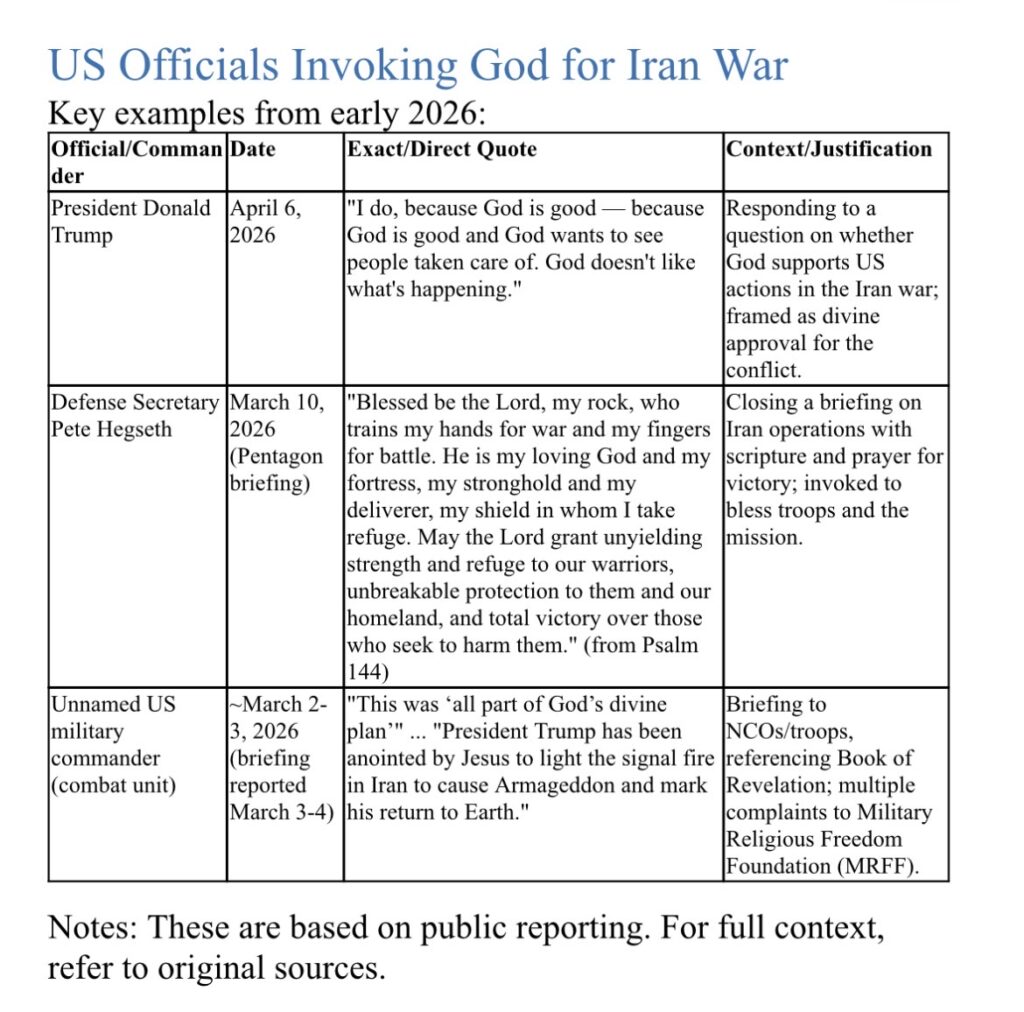
Instead of asking “what causes war?” or “how can states cooperate?”, postmodernists ask a different kind of question: how did certain ideas — the sovereign state, national security, anarchy, the “enemy” — come to be accepted as natural and unquestionable? They argue that these are not facts of nature but constructions of language, power and history. The task of theory, then, is not to explain reality but to expose how reality is represented, and whose interests those representations serve.
| In one sentencePostmodernism in IR is an approach that treats knowledge about world politics as inseparable from power, and uses textual and critical methods to question the taken-for-granted concepts (state, sovereignty, security, identity) that other theories assume to be objectively real. |
2. Brief History
Postmodernism did not begin in IR. Its roots lie in twentieth-century European philosophy, literary criticism and social theory, from which it was later imported into the study of world politics.
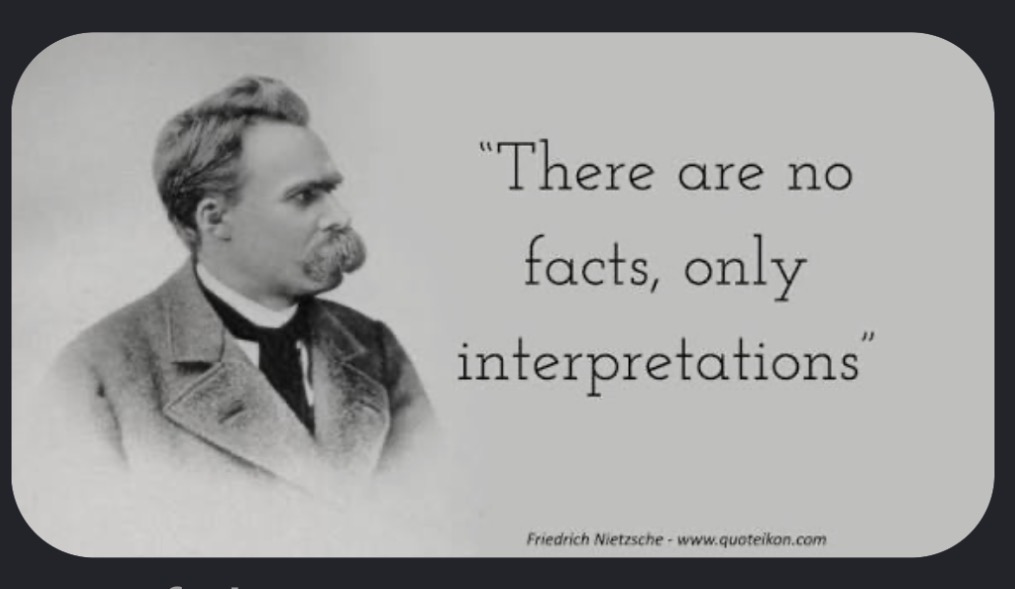
• Philosophical origins: The approach draws on French thinkers such as Friedrich Nietzsche (on the will to power and the death of objective truth), Michel Foucault (on the power–knowledge relationship and discourse), Jacques Derrida (on deconstruction and the instability of texts) and Jean-François Lyotard, who in 1979 famously defined the “postmodern condition” as “incredulity towards metanarratives.”
• Entry into IR (1980s): Postmodernism reached IR during the so-called “Third Debate” (or “Third Great Debate”) between positivists and post-positivists. A landmark moment was Richard Ashley’s 1984 critique of neorealism, “The Poverty of Neorealism.”
• Consolidation (late 1980s–1990s): The 1990 special issue of International Studies Quarterly, edited by Ashley and R. B. J. Walker on “speaking the language of exile,” and James Der Derian and Michael Shapiro’s 1989 volume International/Intertextual Relations helped establish postmodernism as a recognised, if controversial, perspective.
• Maturation: Through the 1990s and 2000s the approach broadened, overlapping with feminist, postcolonial and constructivist work, and was increasingly applied to security, identity, war, surveillance and the politics of representation.
3. Major Proponents
Postmodern IR has no single founder; it is associated with a cluster of scholars who imported continental theory into the discipline. Key figures include:
| Thinker | Contribution to Postmodern IR |
| Richard K. Ashley | Pioneering deconstruction of neorealism; critique of the “sovereign state” and the “anarchy problematique.” |
| R. B. J. Walker | Showed how the inside/outside distinction and sovereignty structure modern political imagination (Inside/Outside, 1993). |
| James Der Derian | Studied diplomacy, espionage, war and the “military-entertainment complex”; pioneered post-structural readings of security. |
| Michael J. Shapiro | Focused on language, representation and the politics of how the world is “textualised” and visualised. |
| David Campbell | Writing Security (1992): showed how US foreign policy and “danger” construct American national identity. |
| Cynthia Weber | Applied post-structural and queer readings to sovereignty, intervention and IR’s founding myths. |
| Roland Bleiker | Explored aesthetics, art and emotion as ways of knowing world politics. |
Behind these IR scholars stand the philosophers who supplied the tools: Foucault, Derrida, Nietzsche, Lyotard, and Jean Baudrillard (on simulation and “hyperreality,” famously provocative in his essays on the Gulf War).
4. Core Assumptions
Postmodernism rests on a set of philosophical assumptions that set it sharply apart from positivist IR:
1. Anti-foundationalism: There is no neutral, objective foundation — no “view from nowhere” — from which the truth about world politics can be established. All knowledge is partial and perspectival.
2. Knowledge is bound up with power: Following Foucault, postmodernists hold that knowledge and power are inseparable (“power/knowledge”). To define what counts as true is itself an exercise of power.
3. Rejection of metanarratives: Grand, totalising stories that claim to explain everything — progress, reason, the march of history, universal human nature — are treated with suspicion.
4. The world is constituted through language and discourse: Reality does not simply exist “out there” waiting to be described; it is produced through the language, texts and representations we use. There is “nothing outside the text.”
5. Identities are constructed, not given: States, nations and “we/they” distinctions are not natural. Identity is created relationally, often by defining the self against a threatening “other.”
6. Skepticism towards the sovereign state: The state is not a timeless, natural unit of analysis but a historically produced way of organising political space and authority.
5. Key Points of the Theory
5.1 Deconstruction
Borrowed from Derrida, deconstruction is a method of close reading that exposes the hidden hierarchies and contradictions within texts and concepts. IR is full of binary oppositions — order/anarchy, inside/outside, domestic/international, civilised/barbaric, self/other — in which the first term is privileged. Deconstruction shows that these pairs are unstable and that the privileged term depends on the one it excludes.
5.2 Discourse and the power–knowledge nexus
A discourse is a structured way of speaking and writing that makes certain statements possible and others unthinkable. Foucault’s insight — that power operates through what is accepted as knowledge — leads postmodernists to study how official languages of “security,” “terrorism,” “development” or “rogue states” produce the very realities they claim merely to describe.
5.3 Genealogy
Also from Foucault, genealogy is a method of writing “history of the present” — tracing how present-day concepts and institutions emerged from contingent struggles, rather than treating them as natural or inevitable. It asks: how did sovereignty, or the modern idea of security, come to seem obvious?
5.4 Identity and the construction of danger
Postmodernists argue that foreign policy is not just a response to external threats; it actively produces national identity by naming dangers and enemies. David Campbell’s work shows how the United States secured its sense of self by continually identifying external threats — from communism to terrorism.
5.5 Representation, simulation and the politics of images
Drawing on Baudrillard, postmodernists highlight how modern war and politics are increasingly conducted through media images, simulations and “hyperreality,” where the representation can matter more than any underlying event.
| Methodological signaturePostmodernists do not build models or test hypotheses. Their characteristic moves are interpretive: deconstructing texts, mapping discourses, writing genealogies, and reading the politics of representation — always to denaturalise what others take for granted. |
6. Merits
• Critical self-awareness: It forces IR to reflect on its own assumptions, categories and silences, rather than treating them as neutral.
• Exposes power in knowledge: By linking knowledge to power, it reveals whose interests are served when certain “truths” about security or order are accepted.
• Gives voice to the marginalised: It draws attention to those excluded by dominant narratives — the colonised, refugees, minorities, the “other.”
• Denaturalises the state: It opens space to imagine political community beyond the sovereign territorial state.
• Sensitivity to language and representation: It alerts scholars and citizens to how framing, labelling and imagery shape what we accept as political reality.
• Encourages ethical reflexivity: By questioning universal claims, it makes us cautious about imposing one culture’s values as if they were universal.
7. Demerits / Criticisms
• Relativism: If no truth is privileged, critics ask how we can ever judge between competing claims — or condemn atrocities. This risks an “anything goes” position.
• Lack of policy guidance: It is strong at critique but offers little positive direction for solving concrete problems such as war, poverty or climate change.
• Self-contradiction: To say “there are no universal truths” itself sounds like a universal truth, which critics see as performative contradiction.
• Obscure language: Its dense, jargon-heavy style is often criticised as needlessly difficult and inaccessible.
• Difficult to test or apply: Because it rejects positivist methods, its claims cannot be empirically tested in the conventional sense.
• Marginal influence on practice: Policymakers and many mainstream scholars regard it as detached from the “real” problems of world politics.
8. Application of the Theory in the Real World
Although postmodernism is sceptical of “application” in the engineering sense, its insights illuminate many real-world phenomena by asking how they are constructed and represented:
8.1 The “War on Terror”
Postmodern analysis examines how the language of “terror,” “evil,” “us versus them” and the “axis of evil” after 9/11 constructed a global enemy, justified extraordinary measures (surveillance, Guantanamo, drone strikes), and reshaped Western, especially American, identity.
8.2 Security and surveillance
The expansion of mass surveillance, biometric borders and “risk” profiling can be read through Foucault’s ideas of discipline and the management of populations — security framed not as protection but as a technique of power.
8.3 Construction of “rogue” and “failed” states
Labels such as “rogue state,” “failed state” or “axis of evil” are not neutral descriptions but discursive acts that legitimise sanctions, intervention or exclusion. Postmodernists study who gets to apply such labels and with what effects.
8.4 Humanitarian intervention and development
The vocabularies of “human rights,” “development” and “civilisation” can carry hidden hierarchies that reproduce colonial relationships between a “developed” West and an “underdeveloped” rest — a concern shared with postcolonial theory.
8.5 Media, images and “virtual” war
Baudrillard’s provocations about the Gulf War, and analyses of how conflicts are mediated through television, social media and video-game-like drone footage, show how representation shapes public understanding of distant violence.
8.6 Borders, migration and identity
The way migrants and refugees are represented — as “flows,” “waves” or “threats” — constructs them as dangers to national identity, shaping border policy and public attitudes. Postmodern analysis exposes the politics buried in such language.
9. Conclusion
Postmodernism is less a theory that explains the world than a critical attitude that questions how we come to know and represent it. Its enduring contribution to International Relations is its insistence that concepts like the state, sovereignty, security and identity are not natural facts but human constructions tied to power. While its critics rightly worry about relativism and its limited practical guidance, postmodernism remains a vital reminder that in world politics, language, knowledge and power are never innocent — and that asking “who benefits from this truth?” is itself a deeply political act.