by Pradeep N
1. Brief History of BRICS
BRICS is an intergovernmental grouping of five — later expanded — major emerging economies: Brazil, Russia, India, China, and South Africa. The grouping has evolved from an economic acronym into one of the most consequential multilateral forums of the 21st century.
1.1 Origins: From BRIC to BRICS
The acronym ‘BRIC’ was coined in 2001 by Goldman Sachs economist Jim O’Neill in a paper titled ‘Building Better Global Economic BRICs’. O’Neill projected that these four economies would collectively outpace the G6 nations by 2050. The term gained diplomatic traction and the first formal BRIC Foreign Ministers’ Meeting was held on the sidelines of the UN General Assembly in 2006.
| KEY DATE | June 2009: First BRIC Summit held in Yekaterinburg, Russia — formalising BRIC as a geopolitical grouping, not merely an economic label. |
• 2006 — First BRIC Foreign Ministers’ Meeting (New York, UN sidelines)
• 2009 — First BRIC Summit, Yekaterinburg, Russia
• 2010 — South Africa invited to join; BRIC becomes BRICS
• 2011 — First BRICS Summit with South Africa (Sanya, China)
• 2014 — New Development Bank (NDB) and Contingent Reserve Arrangement (CRA) established
• 2023 — Historic expansion: six new members invited (Argentina, Egypt, Ethiopia, Iran, Saudi Arabia, UAE)
• 2024 — Four new members formally join; grouping expands to BRICS+
1.2 India’s Entry and Early Engagement
India was a founding member of BRIC from the very first summit. As the world’s largest democracy and one of the fastest-growing major economies, India brought both strategic depth and a democratic credentials that distinguished BRICS from other emerging-economy forums. India hosted the 4th BRICS Summit in New Delhi in 2012 under the theme ‘BRICS Partnership for Global Stability, Security and Prosperity’.
2. Organisational Structure of BRICS
BRICS does not operate through a permanent secretariat or binding treaty framework. It functions through a rotating annual Chairmanship, which holds the Presidency and coordinates activities for that year. This informal, consensus-based structure reflects the diversity of political systems within the group.
2.1 Key Institutional Mechanisms
• Apex body: Annual BRICS Summit
• Held annually, hosted by the Chair country. Leaders adopt a Joint Declaration summarising priorities and agreements.
• Sector councils (Finance, Foreign Affairs, Trade, Health, Education) coordinate policy. Ministerial Track:
• National security advisers and senior officials prepare summit agendas and negotiate documents. Sherpa Track:
• Engages private sector; established 2013. India chairs periodically. Business Council:
• Multilateral development bank headquartered in Shanghai. Finances infrastructure and sustainable development. New Development Bank (NDB):
• US$100 billion pool to address short-term balance-of-payments pressures. Contingent Reserve Arrangement (CRA):
2.2 New Development Bank — Key Data
| Parameter | Detail |
| Founded | 2014 (Fortaleza Declaration) |
| Headquarters | Shanghai, China |
| Regional Office (Africa) | Johannesburg, South Africa |
| Initial Authorised Capital | US$ 100 billion |
| India’s Share | 20% (equal to all founding members) |
| Total Projects Approved (by 2024) | ~100 projects worth US$ 35+ billion |
| India Projects Financed | Infrastructure, renewable energy, urban transit |
| New Members | Bangladesh, UAE, Egypt, Uruguay (post-2021) |
3. Major Agreements and Declarations
BRICS has produced a substantial body of cooperative agreements, memoranda, and declarations across economic, political, and people-to-people domains. While non-binding, these agreements shape multilateral positions and bilateral cooperation.
3.1 Political and Security Agreements
• 2009 Yekaterinburg Declaration — Called for reform of the international monetary system and greater representation for emerging economies in global governance.
• 2012 New Delhi Declaration — India-hosted; advocated for ‘democratisation of global governance’, reform of the UN Security Council, and financial system reform. Notably aligned with India’s UNSC bid.
• 2013 eThekwini Declaration — Established the BRICS Leaders’ Business Forum; agreed on cooperation on cybersecurity.
• 2022 Beijing Declaration — Amid the Ukraine conflict, BRICS adopted a ‘balanced’ stance, refraining from naming Russia — significant given India and China’s abstention at UNSC.
• 2023 Johannesburg Declaration — Announced expansion of BRICS to BRICS+; called for reform of Bretton Woods institutions; emphasised using local currencies in trade.
3.2 Economic and Financial Agreements
• Contingent Reserve Arrangement (CRA), 2014 — US$100 billion liquidity support mechanism. India’s contribution: US$18 billion.
• NDB Framework Agreement, 2014 — Equal shareholding (20% each) for founding members including India; each has equal veto on key decisions.
• BRICS Interbank Cooperation Mechanism — Facilitates financing of investment projects among member countries.
• Local Currency Trade Framework (discussed from 2023) — India has been exploring rupee-denominated trade with Russia under broader BRICS momentum.
3.3 People-to-People and Scientific Agreements
• BRICS Network University — Consortium of universities; India’s IITs and central universities participate.
• BRICS Young Scientists Forum — Annual collaboration platform; India regularly sends delegations.
• BRICS Science, Technology and Innovation (STI) Framework — Coordinated research in areas like energy, water, and agro-technology.
• BRICS Film Festival — Cultural diplomacy initiative; first held 2010. Indian films have won awards at the festival.
4. India’s Contribution to BRICS
India has been among the most active and strategically significant members of BRICS. Its contributions span financial, diplomatic, institutional, and normative domains.
4.1 Economic and Financial Contribution
• India is the third-largest contributor to the NDB after joining as a founding member with a 20% stake.
• India’s contribution to the CRA stands at US$18 billion, reflecting its commitment to financial stability mechanisms.
• India has received NDB financing for several major projects: the Delhi-Meerut RRTS (rapid rail), renewable energy projects (solar, wind), and smart city infrastructure.
| DATA POINT | As of 2024, NDB has approved over US$4 billion worth of projects in India across infrastructure, clean energy, and urban development. |
4.2 Diplomatic and Political Leadership
• India hosted the 4th BRICS Summit (New Delhi, 2012) and the 15th BRICS Foreign Ministers’ Meeting (2023).
• Under the theme ‘BRICS@10: Partnership for Peace, Development and Security’ (2012), India emphasised the centrality of emerging economies in global governance reform.
• India has consistently used BRICS platforms to advocate for UN Security Council reform, WTO reform, and reform of the IMF quota system.
• India’s position on BRICS expansion (2023) was strategic: while favouring enlargement in principle, India sought to ensure that expansion did not become a vehicle for China-driven anti-Western coalitioning.
4.3 Normative and Institutional Contribution
India has positioned itself as a bridge-builder within BRICS, maintaining robust trade ties with both Western economies and BRICS partners. This ‘strategic autonomy’ posture reflects India’s broader foreign policy doctrine.
• India promoted the concept of ‘Reform, not Replacement’ with respect to multilateral institutions — distinguishing it from more revisionist positions within BRICS.
• India introduced the BRICS Anti-Corruption Working Group and advocated for transparency norms.
• India has championed inclusion of the Global South voice within BRICS, aligning it with its broader leadership of G77 and G20 (India held G20 Presidency 2023).
4.4 India’s Economic Weight in BRICS
| Indicator | India | China | Brazil | Russia | South Africa |
| GDP (USD trillion, 2024 est.) | ~3.9 | ~18.5 | ~2.2 | ~2.1 | ~0.4 |
| GDP Growth Rate (2024, %) | 6.5–7.0 | 4.6 | 2.1 | 2.6 | 1.2 |
| Share of World GDP (PPP, %) | ~8.0 | ~19.5 | ~2.5 | ~3.4 | ~0.6 |
| Population (billions) | 1.44 | 1.41 | 0.22 | 0.14 | 0.06 |
| NDB Voting Share (%) | 20 | 20 | 20 | 20 | 20 |
5. Emerging Trends: India and BRICS+
The BRICS landscape has changed significantly since 2022–23. Geopolitical shifts, the Russia-Ukraine war, the China-India rivalry, and the Global South discourse are reshaping what BRICS means for India.
5.1 BRICS Expansion and the ‘BRICS+’ Phenomenon
The 2023 Johannesburg Summit produced the most significant structural change in BRICS history: the invitation of six new members — Argentina (later declined), Egypt, Ethiopia, Iran, Saudi Arabia, and the UAE. By January 2024, four formally joined. This expansion — often labelled BRICS+ — creates a grouping that now includes major oil exporters and Islamic nations.
| SIGNIFICANCE FOR INDIA | Inclusion of Saudi Arabia and UAE strengthens India’s Gulf diplomacy within a multilateral framework. Iran’s entry creates complications given India-US ties and Chabahar port interests. |
5.2 De-dollarisation and Local Currency Trade
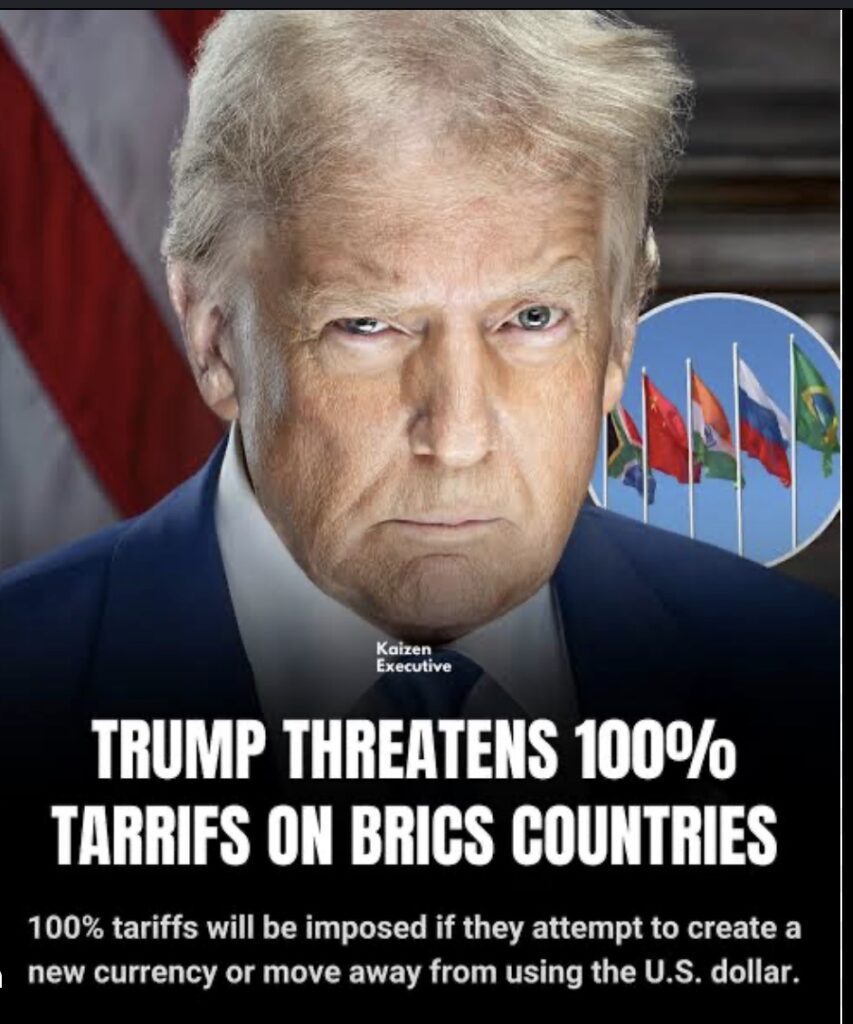
Russia and China have pushed strongly for reducing dependence on the US dollar. India has been cautious but not opposed. Since 2022, India has used the Indian Rupee for select oil imports from Russia, though the mechanism has faced settlement challenges due to Russia’s limited demand for rupee-denominated goods.
• India-Russia rupee trade: over 35 million barrels of oil settled in INR (2022–23), but ~35 billion rupee surplus accumulated in Russian accounts — signalling structural limitations.
• BRICS Common Currency Debate: India has publicly opposed a BRICS common currency, arguing it is premature and risks undermining monetary sovereignty.
• India favours a ‘basket of local currencies’ approach rather than a single BRICS currency.
5.3 India-China Dynamics within BRICS
The India-China bilateral relationship casts a long shadow over India’s BRICS engagement. Despite the Galwan Valley clash (2020) and ongoing border tensions, both countries have maintained BRICS cooperation — illustrating the ‘compartmentalisation’ strategy in Indian foreign policy.
• India has resisted China’s attempts to transform BRICS into an anti-Western bloc.
• India has supported NDB lending to non-BRICS members as a way to dilute Chinese institutional dominance.
• At the 2023 summit, India and China agreed to ‘manage differences’ while cooperating in multilateral forums — a classic example of strategic ambiguity.
5.4 BRICS and the Global South
India’s G20 Presidency (2023) deepened its positioning as the ‘Voice of the Global South’. India brought this framing into BRICS by advocating for African Union membership in the G20 and for expanded African representation in the NDB.
• ‘Voice of the Global South’ Summit — hosted by India (January 2023) ahead of G20; aligned BRICS and G20 priorities.
• India positioned BRICS expansion as South-South solidarity, not anti-West alignment.
• Africa’s inclusion (Ethiopia, Egypt, South Africa) has strengthened India’s ties with the African continent through the BRICS institutional channel.
5.5 Technology, Climate and Health Cooperation
• BRICS STI Framework — India leads working groups on AI governance and digital public infrastructure, drawing on UPI and Aadhaar models.
• BRICS Climate Action — India aligns BRICS positions with its own solar/renewable agenda (International Solar Alliance, CDRI).
• BRICS Health Cooperation — COVID-19 pandemic highlighted potential: India supplied vaccines to BRICS partners through Vaccine Maitri; vaccine cooperation was formalised in a BRICS Vaccine R&D Centre proposal.
| TREND WATCH | India is increasingly using BRICS as a platform to export its digital public infrastructure model (DPI) — Aadhaar, UPI, CoWIN — to other developing-country members. |
6. Critical Assessment and Conclusion
India’s engagement with BRICS is best understood through the lens of ‘strategic multi-alignment’ — the ability to participate in, and benefit from, diverse multilateral groupings without being captured by any one geopolitical bloc. BRICS offers India several tangible assets:
• Institutional leverage through NDB for development finance, independent of Western conditionality.
• A diplomatic platform to push UNSC reform and IMF quota recalibration.
• Economic connectivity with Russia (energy), China (trade, investment, NDB), and now Gulf states.
• Soft power visibility through cultural, scientific, and education cooperation.
However, BRICS also presents structural tensions for India. The dominant China-Russia axis within the grouping often pulls in directions incompatible with India’s Western partnerships, particularly the Quad and I2U2. The expansion to BRICS+ includes states with complex relationships with India — Iran being the most prominent example. Managing these tensions while extracting strategic value from BRICS will remain the central challenge for Indian foreign policy in the BRICS+ era.
| EXAM NOTE | For IR theory linkage: India’s BRICS strategy exemplifies neoliberal institutionalism (using institutions for mutual gain) alongside realist hedging — a hybrid approach consistent with India’s broader multi-alignment doctrine. |
Key References and Data Sources
• BRICS Joint Declarations — 2009–2023 (brics2023.org)
• New Development Bank Annual Reports — 2015–2024 (ndb.int)
• Ministry of External Affairs, India — BRICS Fact Sheet (mea.gov.in)
• O’Neill, J. (2001). ‘Building Better Global Economic BRICs’. Goldman Sachs Global Economics Paper No. 66.
• Panova, V. (2021). ‘BRICS: Mechanisms, Structures and Global Governance’. International Organisations Research Journal.
• World Bank GDP Data — 2024 Estimates (data.worldbank.org)
• Stuenkel, O. (2020). The BRICS and the Future of Global Order. Lexington Books.
• Indian Ministry of Finance — NDB India Project Portfolio (finmin.nic.in)